
Construction & Industrial Machinery
Wooden Float
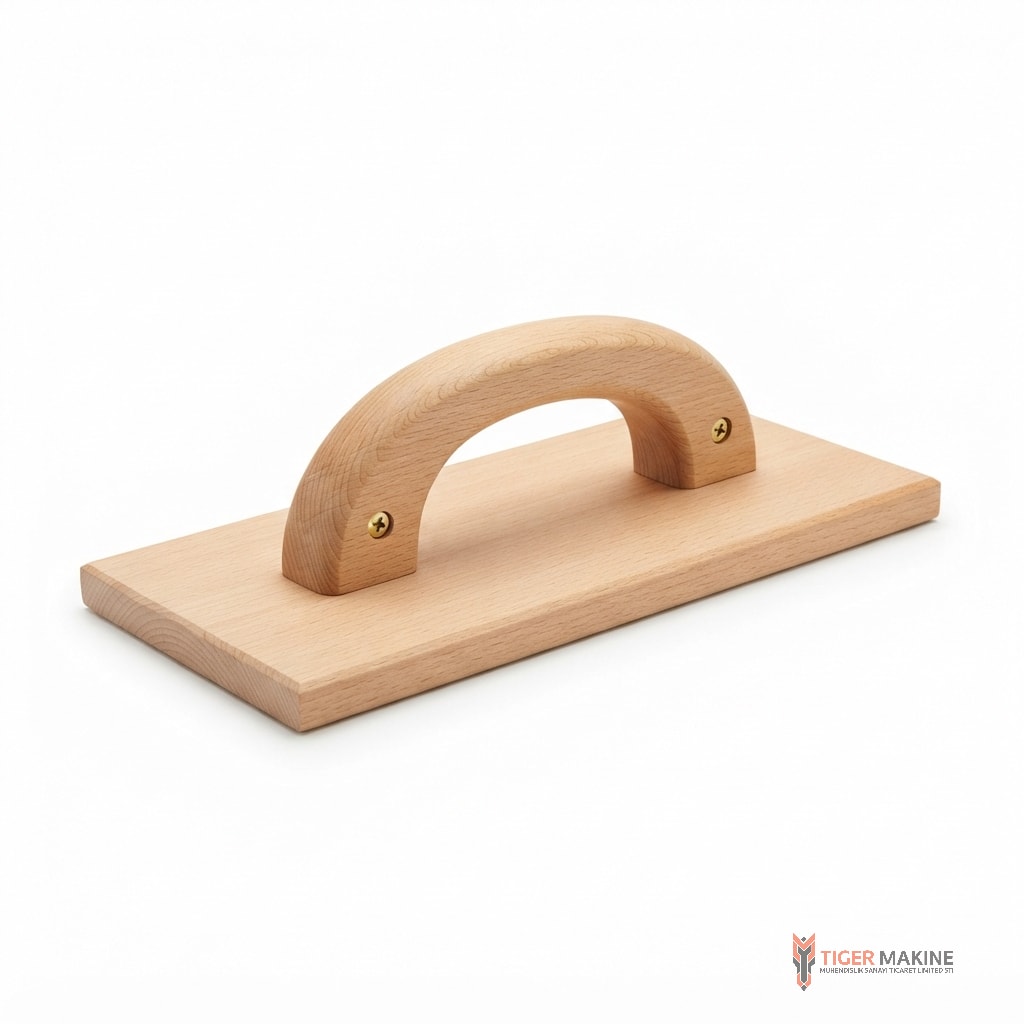
The plasterer's finishing tool: a flat wooden face that smooths and compacts the surface to a fine texture.
- Flat wooden face
- Planed smooth
- Curved handle
- Light and durable
About this product
How the Wooden Float works
After plaster or render has been spread and levelled, the surface needs a final pass to close the pores and even out the texture. A wooden float does this job: it brings sand to the surface and leaves a slightly rough, uniform finish that takes paint or a second coat well.
The float has a flat, rectangular blade of wood, planed smooth on the working face, and a curved handle fitted on top that gives a firm, comfortable grip. Wood does not stick to wet plaster as much as metal, so the float glides and leaves a texture different from a steel trowel.
Plasterers use floats of different sizes and finishes for different stages, and also use them on concrete paths and slabs to bring up a non-slip surface. Rinse it after use and let it dry out of the sun; a well-kept float will last for many jobs.
Before you buy the Wooden Float
For a fine, even finish on plaster, a wooden float is hard to beat. The flat planed face compacts the surface and leaves a smooth texture. Keep the face flat and dry, and use a separate float for coarse and fine work.
Specifications
Specifications
Wooden Float: the specifications
| Product type | Wooden plastering float |
|---|---|
| Material | Wood, planed face |
| Handle | Curved wooden handle |
| Use | Finishing plaster, render and screed |
| Supplied as | Single units or cartons |
| Blade length and width | On request |
Sizes available
Need another size of the Wooden Float?
Ask about sizesKey features
Key features of the Wooden Float
Flat wooden face
Closes pores and evens the surface of plaster.
Planed smooth
Glides without dragging the wet mix.
Curved handle
Firm grip for flat, even strokes.
Light and durable
Easy to use for long periods.
Questions
Questions about the Wooden Float
Wood gives a slightly rougher finish that grips paint; plastic gives a smoother result. Many plasterers keep both.